

Motorcycle Road Trip Packing Guide: Pack Light, Ride Far, and Arrive Ready
A motorcycle road trip is won or lost before the engine starts. A car swallows "just in case" items without complaint; a bike makes you pay for every extra kilo in handling, comfort, and fatigue. With no spare seat and no trunk, packing is not about squeezing in more — it is about choosing well. This guide walks through a simple, weight-conscious system for a multi-day ride: what to take, where to put it, and what to check before you leave. It works for a weekend escape and scales up to a two-week tour.
1. Plan the route — then pack for it
Packing starts with the route, not the bag. Work out your daily mileage, fuel stops, and overnight stops first, then pack for the trip you are actually taking. Check the weather along the whole route, not just at home — mountain passes and coastal roads can be a different season from your driveway. Keep daily distances realistic: 250 to 350 kilometres a day leaves time for fuel, food, photos, and the unexpected. If you are new to touring, Home & Jet's guide on how to prepare for a road trip covers the planning side in more depth.
Before any long ride, give the bike a proper pre-ride check: tire pressures and tread, brakes, lights, chain tension and lube, oil and coolant levels, and every fastener you can reach. A small problem found in the garage is an errand; the same problem found at the roadside is a ruined day.
2. Pack light and keep the weight balanced
Lay everything out on the floor, then remove a third of it. Almost every rider overpacks on the first tour and edits hard on the second. You need fewer clothes than you think — quick-dry fabrics can be washed in a sink and worn again — and bulky "maybe" items are the first to go.
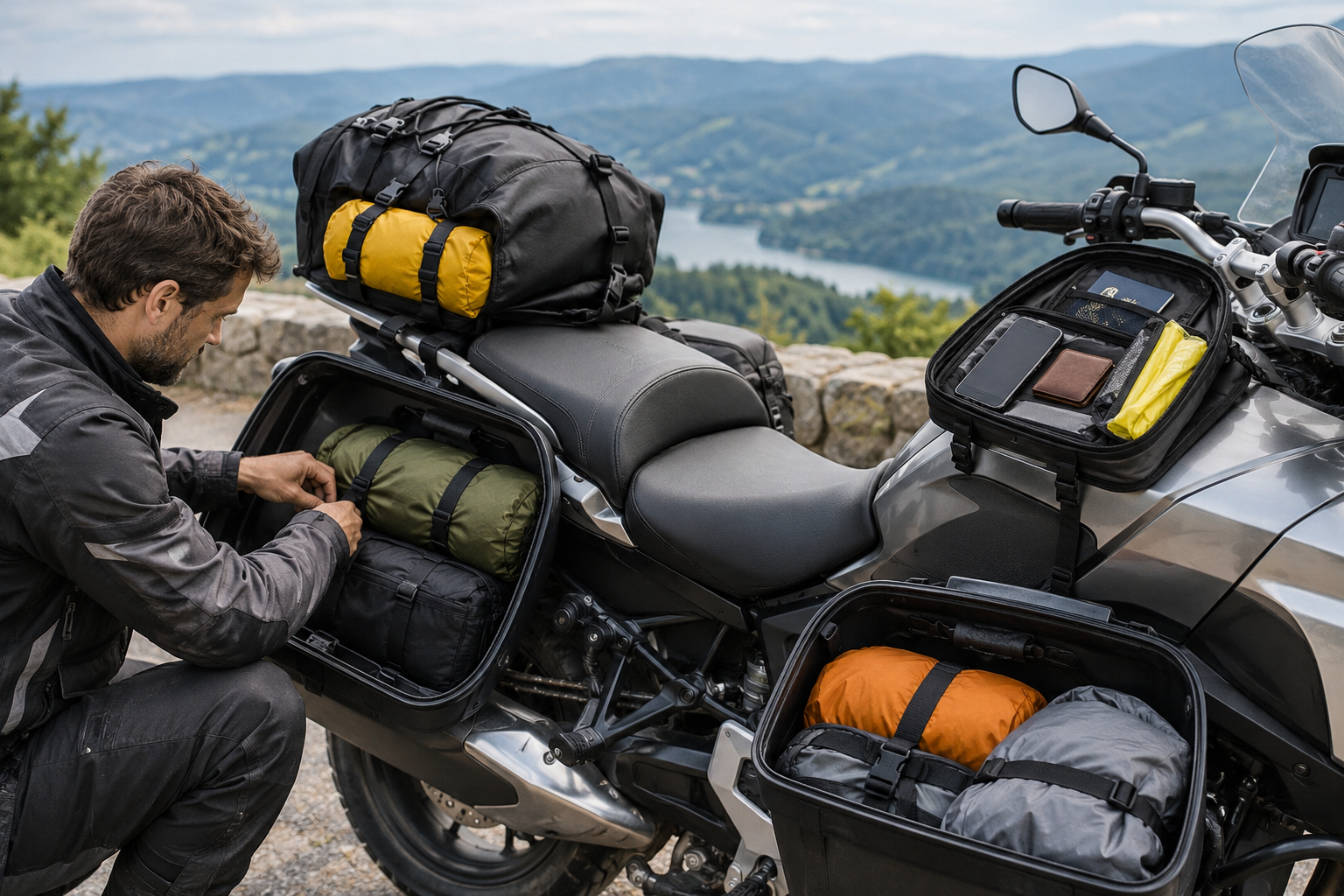
Where the weight sits matters as much as how much there is. Heavy items go low and close to the bike's centre, split evenly left and right so the bike handles the same in both directions. Saddlebags carry the bulk, a tail bag takes lighter gear, and a small tank bag keeps documents, phone, wallet, and rain gear within easy reach at every stop. Dry bags inside your luggage and a couple of compression sacks keep everything waterproof and compact. If you want a complete checklist to compare against, The Ultimate Road Trip Packing List is a good starting point — just translate it ruthlessly into bike-sized portions.
3. Riding gear: what to wear on and off the bike
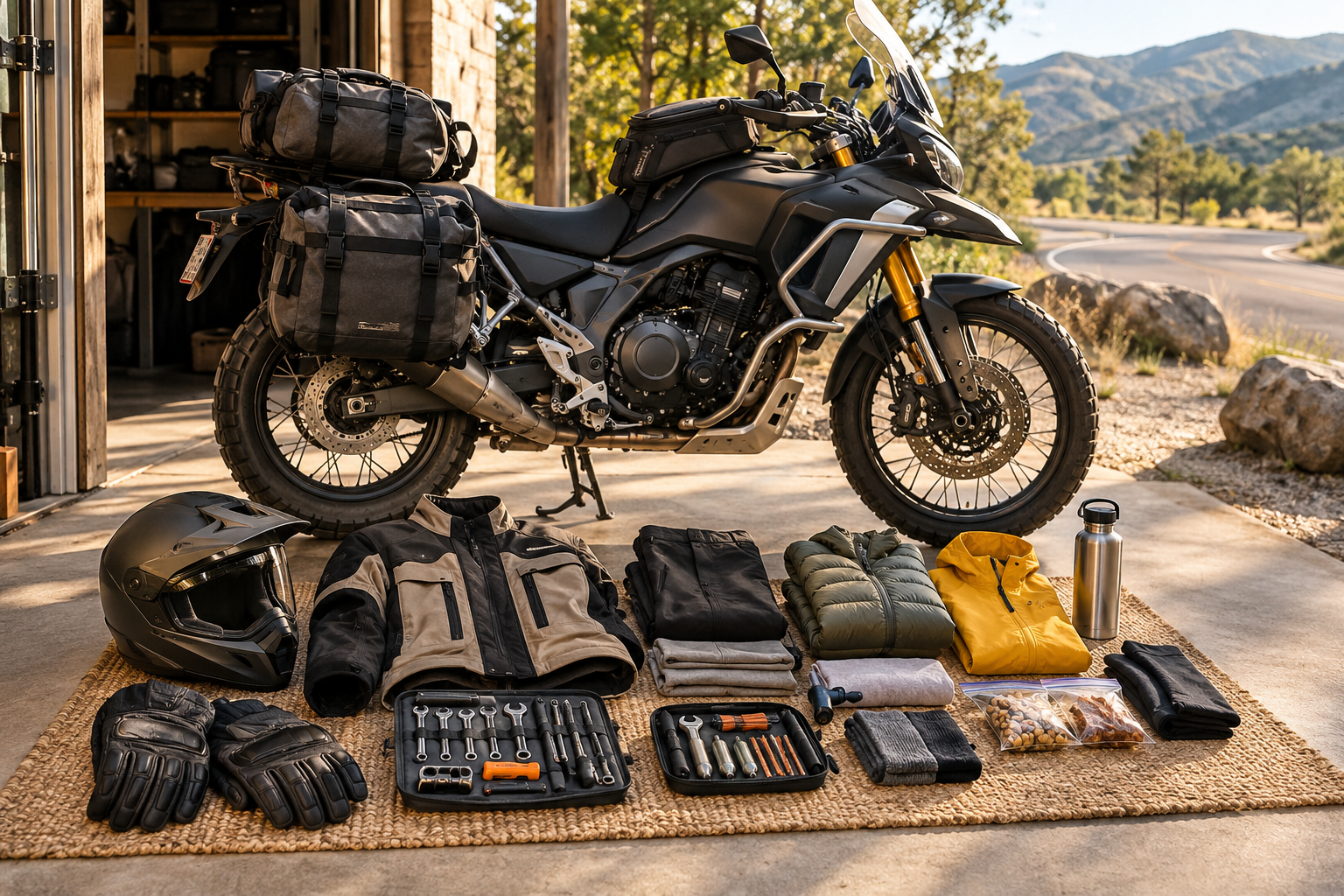
Your riding gear is both luggage and safety equipment, so it earns its place. A well-fitting helmet, an armoured jacket and trousers, proper gloves, and sturdy boots are the non-negotiables. Build your clothing around layers: a base layer, a warm mid-layer for cold mornings and high passes, and a compact waterproof oversuit that goes on in a minute when the sky changes. Layers you can add and remove beat one heavy jacket that is wrong half the day.
Off the bike, keep it minimal: one set of comfortable clothes and light shoes for the evening is enough for most trips. If everything you wear off the bike fits in one small packing cube, you have it about right.
4. Protect the bike and carry a small tool kit
A basic tool kit weighs little and can save a trip. Carry a tire plug repair kit and a small pump or CO2 inflators, chain lube, zip ties, electrical tape, spare fuses and bulbs, a multi-tool, and a small torch. Know how to use them before you leave — the roadside is a bad classroom.
While you are checking fasteners, look over the bodywork too. Loose or cracked panels vibrate, worsen in the wind, and can let go at speed. If a panel is cracked or loose before you set off, replace it with model-specific replacement motorcycle fairings rather than riding with a temporary fix. Good wind protection also matters more than riders expect: a secure screen and intact panels cut fatigue noticeably on long, fast stretches.
5. Navigation, charging, and documents
Download offline maps for the whole route before you leave; mountain roads and rural areas still have dead zones. A secure phone mount, a power bank, and a charging cable you have tested on the bike cover navigation and communication. Keep your licence, insurance, registration, and emergency contacts in one waterproof pouch, and leave a copy — plus your route and expected arrival times — with someone at home.
On unfamiliar roads, ride defensively and leave margin for the unexpected; these defensive riding tips for motorcycle safety are worth a read before any tour. Plan a break every couple of hours: tired riders make mistakes, and the trip is supposed to be the good part.
6. Food, water, and comfort on the road
Carry water and a few snacks for the stretches between stops, especially in hot or remote country. Sun protection, lip balm, and earplugs take almost no space and make long days far more pleasant. A basic first-aid kit and a compact overnight kit — toiletries, any medication, a change of base layer — round out the load.
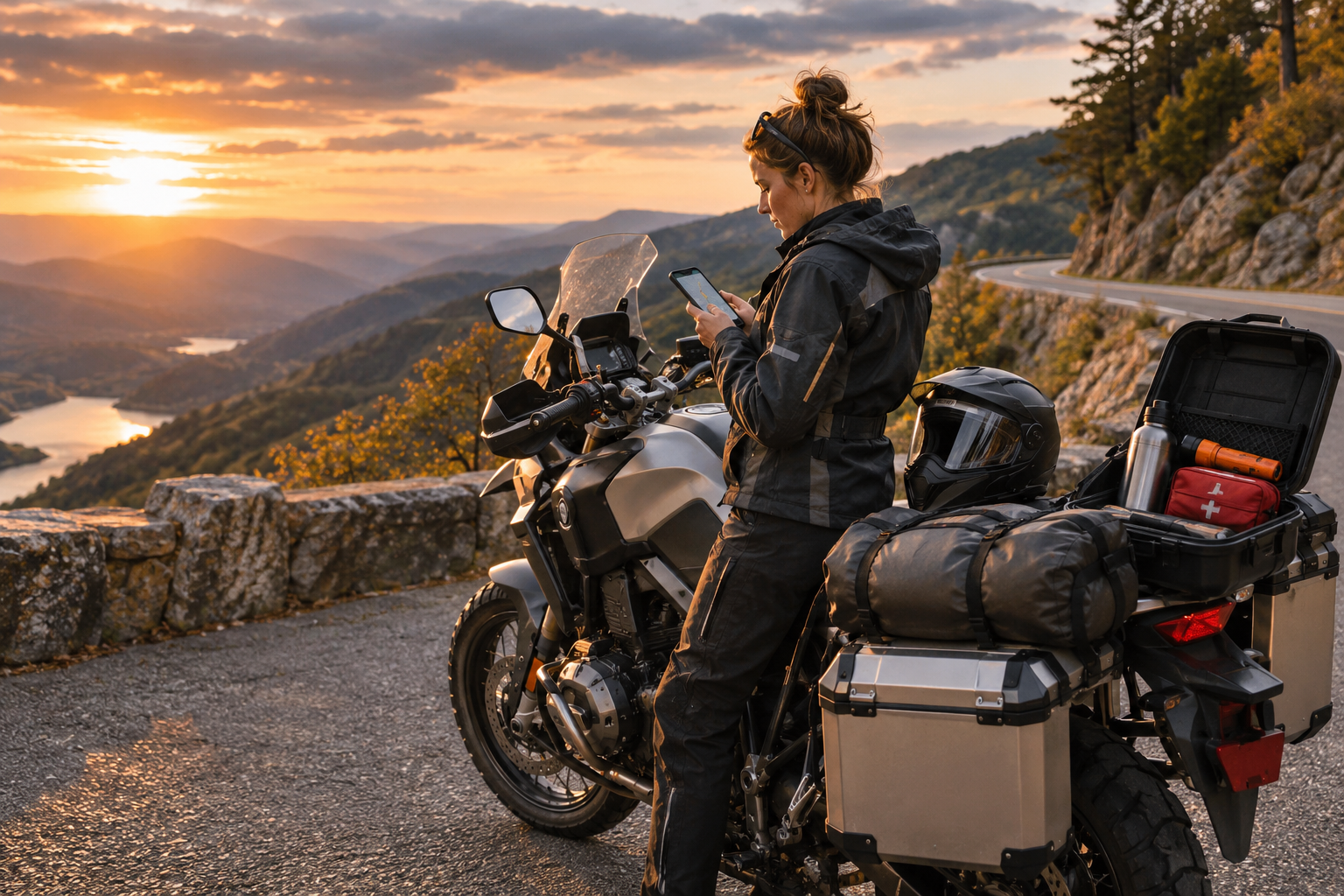
Final checklist before you leave:
Route planned, offline maps downloaded, someone at home has your itinerary
Bike checked: tires, brakes, lights, chain, fluids, fasteners, panels secure
Weight packed low, balanced left and right, heavy items near the centre
Riding gear and layers ready; waterproofs within easy reach
Tool kit, tire repair kit, and pump on board
Documents in a waterproof pouch; phone mount and charging tested
Water, snacks, earplugs, sun protection, first-aid kit packed
Finally, do a short loaded test ride before departure day. Twenty minutes with full luggage will tell you if anything shifts, flaps, or unbalances the bike — while you are still close enough to home to fix it. Then set off, ride your own pace, and enjoy the road.
Planning a motorcycle road trip? Discover how to pack light, balance your luggage, and prepare your bike for a safe and comfortable multi-day adventure with this practical packing guide.